
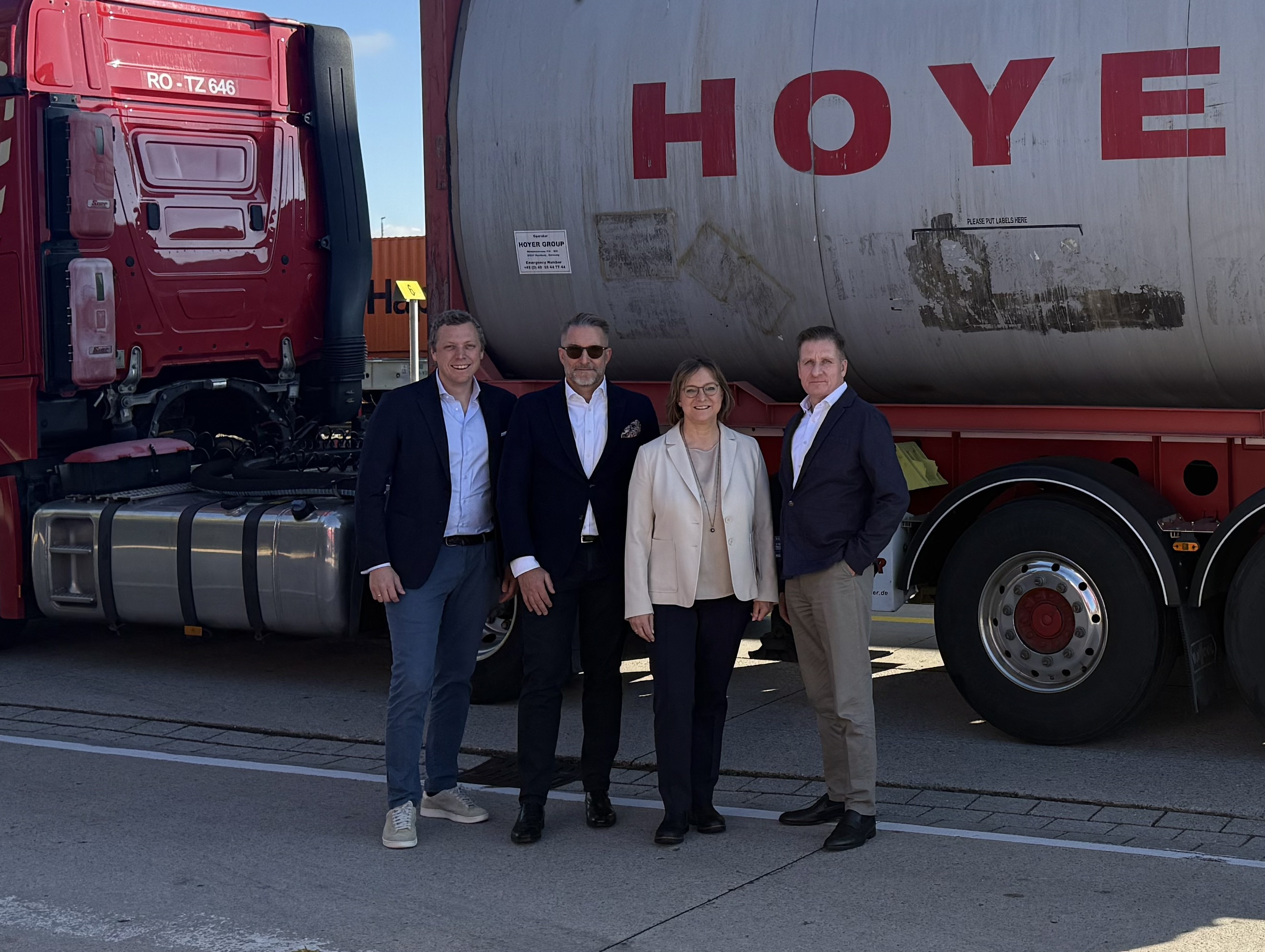
A large share of dangerous goods shipments can now be processed digitally and partly automatically at combined transport terminals. CONROO and the Logistics Competence Centre Prien (LKZ) developed the solution together with terminal operator DUSS and Kombiverkehr KG over 18 months, funded by the German Federal Ministry of Transport (BMV) under the Zukunft Schienengüterverkehr (Z-SGV) programme.
Dangerous goods carry heightened requirements for documentation, inspection and traceability. In combined transport, those checks span several parties and separate systems. The project set out to digitalise the largely manual driver and loading unit checks on road-side delivery and pickup, and to run them without counter processing while meeting safety rules.
Driver verification now happens during digital pre-announcement. The driver registers via smartphone; identity, driving licence and ADR certificate are checked, and the registered hazard classes are matched against the loading unit data – either at booking or on arrival at the terminal.
“The driver’s smartphone becomes a digital terminal ID. Identity, ADR authorisation and the relevant transport data are checked before arrival and matched against terminal data. The driver process runs safely and efficiently, with no additional hardware in the terminal,” says Felix Paul Czerny, Co-Founder and CEO of CONROO GmbH.
The project also showed where automation reaches its limits. Physical damage to loading units, soiled inspection plates, detaching hazard labels or possible leaks cannot be reliably detected by camera. Safety-relevant inspections therefore remain the responsibility of trained terminal staff. Digitalisation relieves them of standardisable checks so they can concentrate where it matters.
DUSS will enable digital dangerous goods handling at all its sites from 2027. Customers who meet the data requirements will be able to use it across Germany.
Full press release (DE) via LKZ Prien: Link
Check out our blogs


